Niagara property specialists
Multi-Family (5+ Units) and Mixed-Use Mortgages in Niagara
At five units the rules change. The building's net operating income, not your pay stub, sets the loan, and debt coverage usually limits you before loan-to-value does. Here is how lenders size a Niagara six-plex or main-street building.
Reviewed November 13, 2026 · Indicative figures, OAC
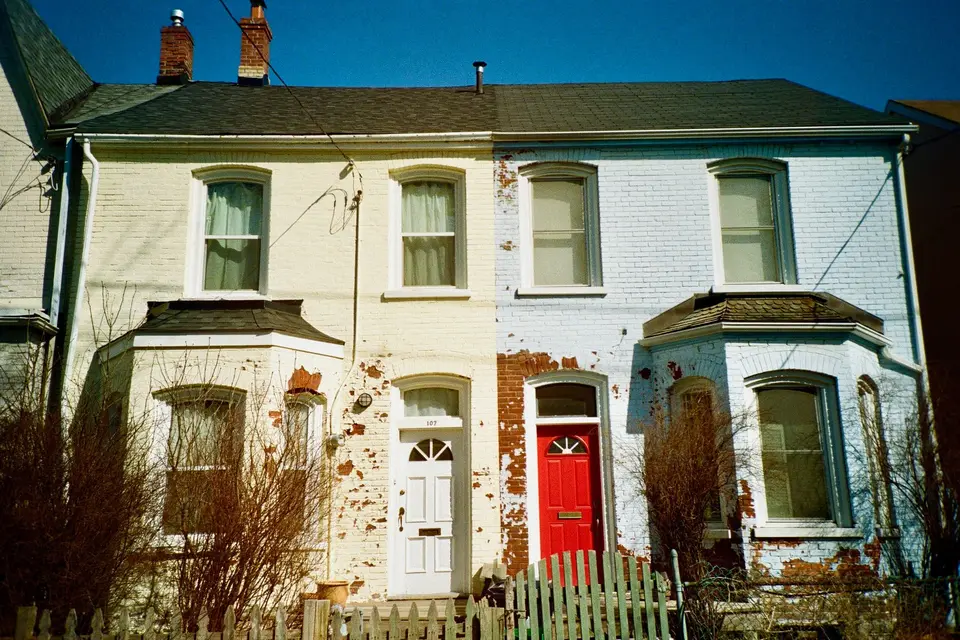
Where residential ends and commercial begins
Residential mortgage rules, including default insurance for owner-occupied homes and personal-income qualification, cover properties of one to four units. A building with five or more residential units is a commercial mortgage, and so is a mixed-use building with a shop or office at street level and apartments above, the kind you see along St. Paul Street in St. Catharines, East Main Street in Welland, Queen Street in Niagara Falls and the older downtowns of Port Colborne and Thorold.
Commercial lenders underwrite the building as a small business. They want to know how much net income it produces, how reliably, and how much debt that income can carry with a margin of safety. Your personal income and net worth still matter, as a guarantor and as evidence you can manage the asset, but they are secondary.
- Commercial threshold
- 5+ units
- Common conventional LTV
- 65%–75%
- Common minimum DSCR
- ~1.20–1.30x
- Typical terms
- 3–10 yrs
DSCR, the debt service coverage ratio, is net operating income divided by annual mortgage payments. A DSCR of 1.25 means the building earns $1.25 for every $1.00 of debt payments.
What commercial lenders look at
The rent roll
A unit-by-unit list of tenants, rents, lease dates and deposits. Lenders check actual rents against the leases and against market rent. Ontario rent control means a long-term tenant paying well below market will stay below market for a long time, which caps what the lender will count.
Operating expenses
Property tax, insurance, utilities paid by the landlord, repairs, management, snow and landscaping, and a reserve for replacements. Lenders normalize expenses, meaning they replace what the seller says with what a building like this realistically costs. A seller's statement showing very low expenses usually gets adjusted upward.
Net operating income and DSCR
Gross rent, minus a vacancy allowance, minus operating expenses, equals net operating income (NOI). The lender sizes the loan so NOI covers the payments at its required DSCR, using its own rate and amortization assumptions.
Building condition and environmental
Expect a building condition assessment on older stock and, on mixed-use buildings with past dry cleaners, garages or similar uses, an environmental site assessment. Main-street buildings in older Niagara downtowns often need both.
Property tax class
Multi-residential and commercial properties can be taxed at different rates from single-family homes. Do not use a residential rate to estimate taxes; get the actual tax bill and confirm with the municipality.
Sizing a loan by the numbers
Worked example: six-plex in St. Catharines, $1,450,000
An investor is offered a six-unit building for $1,450,000. Each unit rents for $1,500 a month. The assumptions below are illustrations, not quotes: a 3% vacancy allowance, operating expenses at 35% of effective income, and a commercial rate of 5.75% on a 25-year amortization.
| Line | Annual |
|---|---|
| Gross potential rent (6 × $1,500 × 12) | $108,000 |
| Less vacancy allowance (3%) | −$3,240 |
| Effective gross income | $104,760 |
| Less operating expenses (35%) | −$36,666 |
| Net operating income (NOI) | $68,094 |
| Implied cap rate (NOI ÷ price) | 4.70% |
| Test | Loan | Annual payments | DSCR |
|---|---|---|---|
| 75% of price | $1,087,500 | $81,565 | 0.83 |
| Loan at a 1.25 DSCR (25 years) | $726,310 | $54,475 | 1.25 |
| Loan at a 1.25 DSCR (30 years) | $783,663 | $54,475 | 1.25 |
At 75% LTV, the building would not cover its own payments (0.83). At a 1.25 DSCR, the maximum payment is $68,094 ÷ 1.25 = $54,475 a year ($4,540 a month), which supports a loan of about $726,300, just 50% of the price. The investor needs about $723,700 down, not $362,500. Stretching to 30 years lifts the loan to about $783,700 (54%).
Cash flow after debt at that loan size is about $13,600 a year. Ontario land transfer tax on $1,450,000 is $25,475; confirm the calculation for a multi-unit property with your real estate lawyer.
CMHC multi-unit insurance
For five-plus unit rental buildings, CMHC offers multi-unit mortgage loan insurance, including the MLI Select program. In exchange for commitments on affordability, energy efficiency or accessibility, these programs can allow higher leverage, longer amortizations and lower rates than conventional commercial loans. They also add paperwork, timelines and premiums, and criteria change. Check current terms on cmhc-schl.gc.ca and with the lender before you build a plan around them.
In our six-plex example, the DSCR limit is what keeps the loan at about 50% LTV. A program that permits a longer amortization or a lower coverage requirement changes that number, which is why insured multi-unit financing is worth pricing on any qualifying building.
Which lender fits
| Building | Usual fit | Notes |
|---|---|---|
| 5–20 units, stable rents | Bank commercial desk, credit union, or CMHC-insured lender | Best pricing; full documentation |
| Mixed-use, retail plus apartments | Credit union or bank commercial | Retail vacancy and lease terms reviewed closely |
| Value-add (renovations, vacant units) | Private or B-lender, short term | Bridge to a long-term loan once stabilized |
| Conversion of a large house into 5+ units | Construction or private financing first | Permits and zoning confirmed with the municipality |
| Four units or fewer | Residential lending | See duplex and suite financing |
Short-term private money for repositioning is explained on our private mortgage page. Fees on commercial and private files are disclosed in writing before you commit.
Documents for a commercial file
- Rent roll, copies of leases and the last two years of operating statements.
- Property tax bill, insurance quote and utility history.
- Building condition assessment and environmental reports if available.
- Your personal net worth statement, tax returns, and a schedule of other properties you own.
- Corporate documents if buying through a company; talk to your accountant and lawyer about the structure.
Steps to finance a multi-family building
- Get the real numbers. Rent roll, leases, expenses and tax bill before you set a price.
- Calculate NOI and DSCR yourself. Use realistic vacancy and expenses; the cash-flow calculator handles the unit math.
- Price both conventional and insured options. A CMHC multi-unit program can change the maximum loan.
- Allow time for due diligence. Appraisal, building condition and environmental reports take weeks, so build that into the conditional period.
- Plan the term and the exit. Commercial terms renew too; know what NOI the building needs at renewal.
Frequently asked questions
Is a five-unit building a residential or commercial mortgage?
In Canada, residential lending generally covers one to four units. A building with five or more units, or a mixed-use building with commercial space, is usually financed as a commercial mortgage, sized on the building's net operating income.
How much down payment do I need for a six-plex in Niagara?
Lenders often advertise 65% to 75% LTV on conventional commercial loans, but debt coverage frequently limits the loan first. In our $1,450,000 St. Catharines example, a 1.25 DSCR limited the loan to about $726,300, so the buyer needed about $723,700 down.
What DSCR do commercial lenders want?
Many lenders look for a debt service coverage ratio of roughly 1.20 to 1.30 on conventional multi-family loans, calculated with their own rate, amortization and expense assumptions. CMHC-insured programs have their own requirements.
Can I use CMHC MLI Select on a Niagara building?
Possibly, if the building has five or more units and you meet the program's affordability, energy-efficiency or accessibility criteria. The program can allow higher leverage and longer amortization than conventional loans, but terms change, so confirm current criteria with CMHC and the lender.
Do lenders use my personal income on a commercial mortgage?
The building's income is the main test. Your personal income, credit, net worth and experience still matter because commercial lenders usually require a personal guarantee and want to see that you can carry the property through vacancies or repairs.
Pre-approval & rate review
Get your Niagara mortgage numbers checked
Tell us where you are buying or what you owe. We reply by email, usually within one business day, with options from across the lender tiers.
- A licensed advisor reviews your numbers against A-lenders, Ontario credit unions and alternative lenders.
- Rate holds of up to 120 days on purchases and renewals (lender-dependent).
- On prime files the lender pays the brokerage, so there is no fee to you; any fee on alternative or private files is disclosed in writing first.
- Nothing goes to a lender or credit bureau until you say so.
Prefer email? Write to hello@mortgageniagara.com.