Niagara property specialists
Closing a Pre-Construction Home When the Appraisal Comes In Low
Many Niagara buyers signed for new homes at peak prices and are now closing into lower appraisals. The lender lends on the lower number. Here is how to measure the gap and the realistic ways to close it.
Reviewed November 13, 2026 · Indicative figures, OAC
Why pre-construction closings come up short
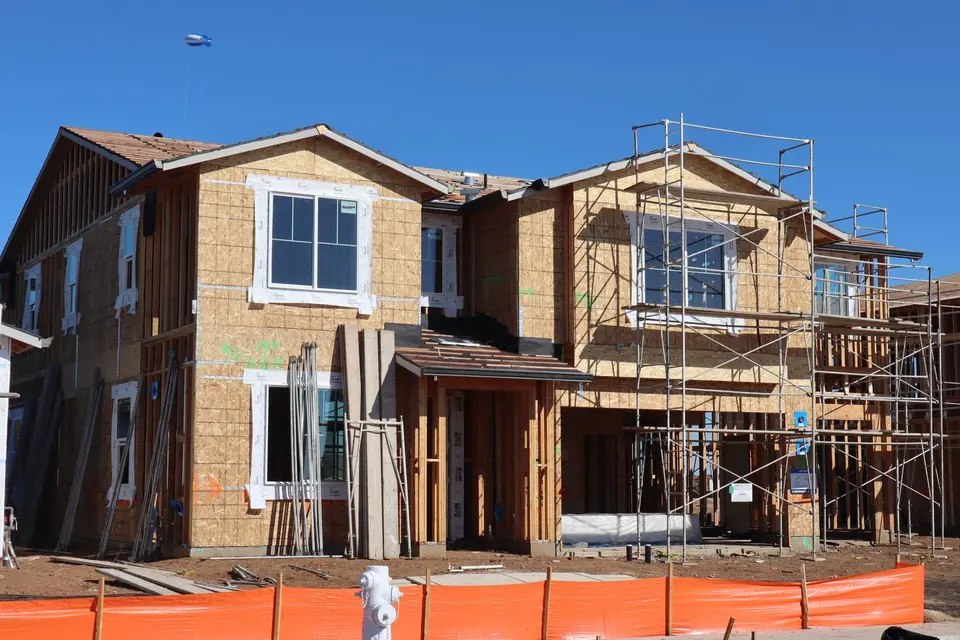
A buyer signs an agreement of purchase and sale with a builder, pays deposits over a year or two, and closes when the home is finished, often two to four years later. In Welland's Dain City and canal-side subdivisions, Thorold's newer neighbourhoods, and Grimsby and Lincoln along the QEW, plenty of those agreements were signed when prices were higher than today. When the house is finally registered and the lender sends an appraiser, the value can come in below the contract price.
Lenders lend on the lower of the purchase price and the appraised value. The contract price does not change, so every dollar of shortfall has to come from somewhere: your cash, a different mortgage structure, the builder, or a second lender.
- Lender uses
- Lower of price or value
- Insured amortization, new builds
- 30 years
- Insured price cap
- $1.5M
- Rate hold (lender-dependent)
- Up to 120 days
Measure the gap first
Worked example: a Welland detached signed at $749,900, appraised at $640,000
A couple signed for a new detached home in Welland at $749,900 and paid $75,000 in deposits. They planned to put 20% down and take a $599,920 conventional mortgage, bringing $149,980 in total. At closing, the appraisal comes in at $640,000.
| Option | Mortgage | Total down payment | Monthly payment (30 yrs) |
|---|---|---|---|
| Original plan: 80% of $749,900 at 4.39% | $599,920 | $149,980 | $2,987 |
| Conventional now: 80% of $640,000 at 4.39% | $512,000 | $237,900 | $2,549 |
| Insured: minimum down on the $640,000 value, 4.29% | $626,242 incl. premium | $148,900 | $3,082 |
The conventional gap: $237,900 − $149,980 = $87,920 more cash than planned.
The insured route: the minimum down payment is calculated on the $640,000 lending value: 5% of $500,000 ($25,000) plus 10% of $140,000 ($14,000) = $39,000. The base loan is $640,000 − $39,000 = $601,000, a 93.9% LTV. With 30-year amortization on a newly built home, the premium is 4.00% plus the 0.20% surcharge = 4.20%, or $25,242, added to the mortgage. The 8% Ontario PST on the premium, $2,019.36, is paid in cash at closing. The buyers bring $749,900 − $601,000 = $148,900, almost exactly what they planned, but they borrow more and pay about $95 a month more than the original plan.
The insured option needs them to qualify at the stress-test rate of 6.29%, a payment of about $3,839 a month, and the price must be under $1.5 million. Other closing costs still apply: Ontario land transfer tax of $11,473 on the $749,900 price (with the first-time buyer refund of up to $4,000 if eligible), legal costs of about $1,850, and the builder's closing adjustments.
Your options, from cheapest to most expensive
1. Challenge the appraisal properly
If the appraiser missed upgrades, a premium lot or recent sales in the same phase, your broker can ask the lender for a reconsideration with comparable sales. It does not always work, but it costs nothing. A second appraisal from a different lender is another route if you are moving the file anyway.
2. Switch to an insured mortgage
As the example shows, if your income qualifies and the price is under $1.5 million, putting less than 20% down on the appraised value can reduce the cash you need. The trade-off is a default insurance premium and a larger loan. The 30-year insured amortization for newly built homes helps the payment. See 30-year amortization rules.
3. Ask the builder
Some builders, facing many low appraisals in one project, offer credits, price adjustments, deposit credits or a vendor take-back (VTB) second mortgage. Any VTB must be acceptable to your first lender and disclosed. Your lawyer handles the paperwork.
4. Use family money or your own savings
A gift from immediate family is accepted by most lenders with a signed gift letter and proof the funds are in your account. RRSP Home Buyers' Plan withdrawals (up to $60,000 per person) and FHSA savings may help first-time buyers; confirm eligibility and timing with your accountant.
5. B-lender first mortgage
Some B-lenders lend at higher LTVs on uninsured files than conventional A-lenders. At 85% of $640,000 ($544,000) the buyers would need $205,900, at a higher rate and with a broker fee of about 1%. It narrows the gap without closing it, and it is a one- or two-year bridge to an A-lender.
6. Private second mortgage
A private lender can place a second mortgage behind your first, up to about 65%–75% of value combined. With a $640,000 appraisal, 75% combined is $480,000, which leaves no room behind an 80% first mortgage. A private second works here only when the first mortgage is well below that line and the remaining gap is small. It is expensive (8.99%–12.99% plus fees) and should be short. See private mortgages.
Which lender tier fits
| Situation | Usual fit |
|---|---|
| Small gap, strong income, price under $1.5M | A-lender insured, 30-year amortization |
| Gap covered by savings or gift | A-lender conventional |
| Price over $1.5M (insurance not available) | A-lender or credit union conventional; B-lender if LTV is the problem |
| Ratios too tight under the stress test | Ontario credit union or B-lender |
| Small final gap after all else | Builder VTB or short private second |
Steps to rescue a pre-construction closing
- Start 120 days out. Get the occupancy or closing date from the builder, and lock a rate hold (up to 120 days, lender-dependent).
- Get an early appraisal estimate. We look at recent resale and builder sales in your phase to estimate the gap before the lender's appraiser does.
- Re-qualify under every structure. Conventional, insured 30-year, credit union and B-lender, with exact cash-to-close for each. Start at pre-approval.
- Have your lawyer review the agreement. Adjustments, any assignment clause, and your options if you cannot close.
- Talk to the builder early. Credits and VTBs are easier to arrange weeks before closing than the day before.
- Close, then plan the refinance. If a B or private piece is involved, set the plan to move back to an A-lender at the first renewal.
New-home buyers may also be eligible for the federal first-time buyer GST rebate (up to $50,000 on new homes up to $1 million, phased out to $1.5 million) and Ontario's matching rebate of the provincial part of HST for first-time buyers of new homes (up to $80,000 on homes up to $1 million). Confirm eligibility and timing with your real estate lawyer. More on new construction in construction and new-build mortgages.
Frequently asked questions
What happens if my new build appraises below the purchase price?
The lender lends on the lower of the price and the appraised value, so you must cover the difference. On a $749,900 home appraised at $640,000, an 80% conventional loan drops from $599,920 to $512,000, so a buyer planning 20% down needs $87,920 more.
Can an insured mortgage help with a low appraisal?
Often, if your income qualifies and the price is under $1.5 million. The minimum down payment is calculated on the appraised value, so in our Welland example the buyers needed $148,900 instead of $237,900, at the cost of a $25,242 premium added to the loan and $2,019.36 PST in cash.
Can I walk away from a pre-construction purchase?
Not without consequences. Failing to close can mean losing deposits and being sued for the builder's losses on resale. Talk to your real estate lawyer before deciding anything, and explore every financing option first.
Will the builder lower the price?
Some builders offer credits, price adjustments or a vendor take-back second mortgage when many buyers in a project face low appraisals. Nothing obliges them to, so ask early and have your lawyer document any change.
Can I get a 30-year amortization on a new build?
Yes. Since December 15, 2024, buyers of newly built homes can get a 30-year insured amortization, with a 0.20% premium surcharge. Conventional mortgages with 20% or more down can also use 30 years with most lenders.
Pre-approval & rate review
Get your Niagara mortgage numbers checked
Tell us where you are buying or what you owe. We reply by email, usually within one business day, with options from across the lender tiers.
- A licensed advisor reviews your numbers against A-lenders, Ontario credit unions and alternative lenders.
- Rate holds of up to 120 days on purchases and renewals (lender-dependent).
- On prime files the lender pays the brokerage, so there is no fee to you; any fee on alternative or private files is disclosed in writing first.
- Nothing goes to a lender or credit bureau until you say so.
Prefer email? Write to hello@mortgageniagara.com.