Niagara property specialists
Vineyard, Hobby Farm and Escarpment Property Mortgages in Niagara
A house with five acres of grapes is a residential mortgage. A working vineyard is an agricultural loan. Knowing which one you are buying, before you write the offer, decides your down payment, your lender and your rate.
Reviewed November 13, 2026 · Indicative figures, OAC
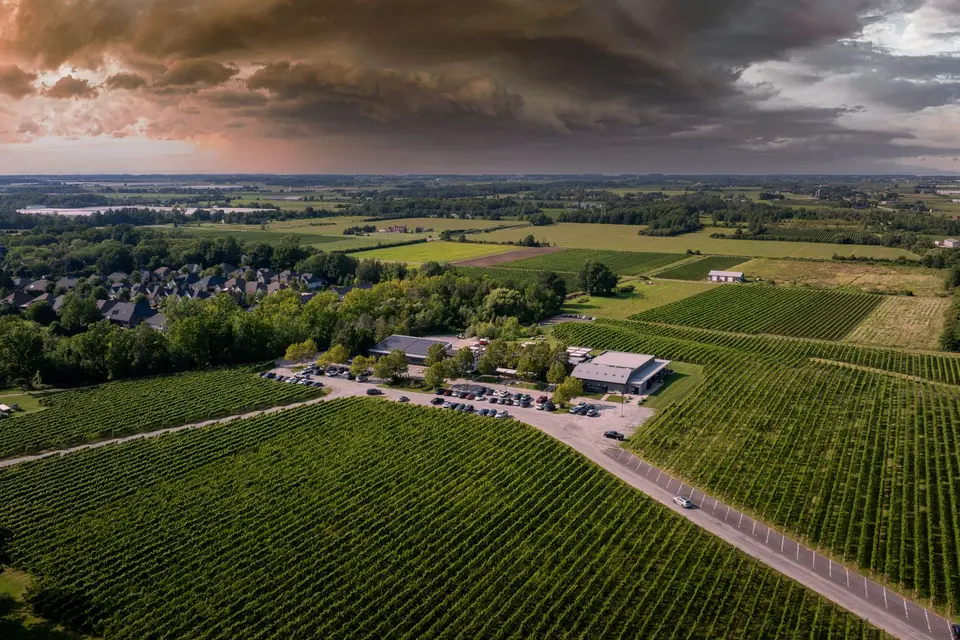
Residential home on farmland, or a farm with a house?
The Niagara Peninsula's tender fruit and grape lands run along the lakeshore plain and up the Beamsville Bench, through Niagara-on-the-Lake's Four Mile Creek and St. Davids areas, and across Lincoln's Vineland and Jordan. Plenty of buyers want a piece of it: a farmhouse with a few acres of vines leased to a neighbouring winery, a ranch bungalow on the bench with an orchard, or an estate home with a barn for horses.
Lenders sort these into two buckets. If the main value is the house and the farming is incidental (a hobby, a lease to a neighbour, a few acres you tend on weekends), it is a residential mortgage, and residential lenders, default insurers and the stress test apply. If the land and the farm operation are the main value and the farm produces income, it is agricultural lending, which is a different credit process run by Farm Credit Canada, farm-lending credit unions and the agriculture desks of the banks.
- Land many A-lenders value
- ~10 acres
- Insured price cap
- $1.5M
- NOTL approx. tax rate
- 1.08%
- Stress test on a 4.39% rate
- 6.39%
What lenders check on a hobby vineyard or farm
How the appraiser splits the value
Residential lenders and default insurers typically finance the home and a reasonable lot. Many A-lenders cap the land they value at about 10 acres or lower the LTV on larger parcels, and outbuildings (barns, drive sheds, equipment buildings) get little or no value. Vines, irrigation and trellis systems are farm improvements and are rarely given lending value by a residential lender.
Zoning, the Greenbelt and the Escarpment
Much of Niagara's farmland is within the provincial Greenbelt's specialty crop area, and properties along the escarpment may fall within the Niagara Escarpment Plan area, where many changes need a permit from the Niagara Escarpment Commission (NEC). These rules can limit severances, second dwellings, additions and non-farm uses such as event spaces. They do not usually stop a mortgage, but they cap what the property can become, and appraisers and lenders know it. Confirm zoning and permits with the municipality and the NEC before you rely on any plan for the land.
Water, septic and access
Many bench and rural properties have wells, cisterns and septic systems. The same water and septic conditions apply as on any rural Niagara home. Irrigation ponds and agricultural wells are separate from potable water and do not satisfy a potability condition.
Your income, not the grapes
Residential lenders qualify you on your employment, business or pension income. Grape revenue from a lease or crop sale counts only if it appears on your tax returns, usually as an average of the last two years of net farm income, and hobby farms often report a loss. Buyers who plan to farm seriously should talk to an accountant about how farm income and losses are reported; we do not give tax advice.
Worked example: what it takes to qualify
Worked example: seven acres in Niagara-on-the-Lake, $1,250,000
A couple buys a renovated farmhouse on seven acres near St. Davids for $1,250,000. Five acres are planted in grapes, sold under contract to a local winery. They put down $350,000 (28%), so the loan is $900,000 and the LTV is 72%. Because the property is under 10 acres, owner-occupied, under $1.5 million and a purchase, it may qualify at the insurable rate of 4.39%.
| Item | Monthly |
|---|---|
| Payment at 4.39% (contract) | $4,926 |
| Payment at 6.39% (stress-test qualifying rate) | $5,969 |
| Property tax ($1,250,000 × approx. 1.08% ÷ 12) | $1,125 |
| Heat (standard lender figure) | $125 |
| GDS housing costs at the qualifying rate | $7,219 |
At the 39% GDS limit, they need gross household income of about $222,100 a year ($7,219 ÷ 0.39 × 12). With a $650 car payment, the 44% TDS limit needs about $214,600, so GDS is the binding ratio here.
Suppose the grape contract brought in $28,000 gross last year. After spray, pruning, harvest labour and equipment, their return shows net farm income of maybe a few thousand dollars, and only that net figure, averaged over two years, can help. The vines are a lifestyle, not a qualifying income.
Closing costs on top of the down payment include Ontario land transfer tax of $21,475 and about $1,850 in legal costs. Farmland that meets the program rules may be taxed at a lower farm property class rate, which would reduce the tax line above; confirm the property's current assessment and tax class with the municipality and MPAC.
Which lender fits which property
| Property | Usual fit | What to expect |
|---|---|---|
| House on under ~10 acres, hobby vines or orchard | A-lender, insured or conventional | Normal residential pricing and qualification |
| House on larger acreage, residential use | A-lender on the residential portion, or a credit union | Bigger down payment or lower LTV on the whole parcel |
| Working vineyard or orchard with farm income | Agricultural lender (Farm Credit Canada, credit unions, bank ag desks) | Business plan, farm financials, equipment and quota reviewed |
| Estate with event, retail or agri-tourism use | Commercial or agricultural lender | Zoning and permits reviewed closely |
| Quick close or bridge while selling another home | Private, short term | 65%–75% LTV, interest-only, fees disclosed |
Above $1.5 million, default insurance is not available and the minimum down payment is 20%. Between 20% down and $1.5 million, the file may price at insurable or uninsured rates depending on the property; see insured vs. insurable vs. uninsured.
Traps we see on Niagara farm properties
- Assuming a severance. Buyers plan to sever a lot to pay down the mortgage. In specialty crop areas, severances are tightly restricted. Never count on one without confirming with the municipality.
- A second house on the property. A farm help house or older second dwelling may be legal only for farm use. Lenders may give it no value or treat it as a rental.
- Income from an event barn or farm stand. If the use is not permitted by zoning, lenders will not count it and may decline.
- Self-employed buyers. Winery owners, growers and trades often show low taxable income. Read the self-employed guide before you shop.
- Underestimating heat and maintenance. Older farmhouses on propane or oil cost more to run than the lender's standard heat figure suggests.
Steps to finance a vineyard or hobby farm
- Decide what you are buying. A home with land, or a farm business. That choice picks the lender channel.
- Collect the property facts. Acreage, what is planted, crop contracts, outbuildings, water and septic, zoning, and whether it is in the Greenbelt or NEC area.
- Get pre-approved on the right basis. We check how lenders will value the land before you make an offer. Start at pre-approval.
- Write conditions that fit a farm. Financing, inspection, water and septic, and review of any crop or land leases by your lawyer.
- Plan the farm separately. If you intend to expand the vineyard, equipment and operating credit usually come from agricultural lenders, not your mortgage.
Frequently asked questions
Can I get a regular mortgage on a hobby vineyard?
Yes, if the property is mainly a residence and the vineyard is incidental. Residential lenders finance the home and a reasonable lot, often up to about 10 acres, and qualify you on your own income. A working vineyard where the farm is the main value usually needs an agricultural lender.
Will lenders count income from selling grapes?
Only if it appears on your tax returns, and usually as an average of the last two years of net farm income, not gross sales. Many hobby farms show small profits or losses, so plan to qualify on your employment, business or pension income.
How much down payment do I need for a farm property in Niagara?
For an owner-occupied home on a modest lot under $1.5 million, the normal federal minimums can apply. Larger acreage often needs more because lenders value only the house and part of the land. In our 18-acre Lincoln illustration, the buyer needed $510,000 down on a $1,350,000 price with a residential lender.
Does the Niagara Escarpment Commission affect my mortgage?
Not directly, but properties within the Niagara Escarpment Plan area often need NEC permits for new buildings, additions and some other changes. That can limit future plans and affect value. Confirm with the NEC and the municipality before you buy.
How much income do I need for a $1.25 million farm property in Niagara-on-the-Lake?
It depends on your down payment, debts and the rate, but as a guide, our seven-acre St. Davids example needed about $222,100 of household income to qualify for a $900,000 loan under the stress test with $350,000 down.
Pre-approval & rate review
Get your Niagara mortgage numbers checked
Tell us where you are buying or what you owe. We reply by email, usually within one business day, with options from across the lender tiers.
- A licensed advisor reviews your numbers against A-lenders, Ontario credit unions and alternative lenders.
- Rate holds of up to 120 days on purchases and renewals (lender-dependent).
- On prime files the lender pays the brokerage, so there is no fee to you; any fee on alternative or private files is disclosed in writing first.
- Nothing goes to a lender or credit bureau until you say so.
Prefer email? Write to hello@mortgageniagara.com.