Niagara property specialists
Duplex, Basement Apartment and Garden Suite Mortgages in Niagara
A legal second unit can lower the income you need to buy and, since January 2025, can be financed up to 90% of the finished value on an insured refinance. Here is how lenders treat duplexes and suites across St. Catharines, Welland and Niagara Falls.
Reviewed November 13, 2026 · Indicative figures, OAC
Why Niagara is full of two-unit houses
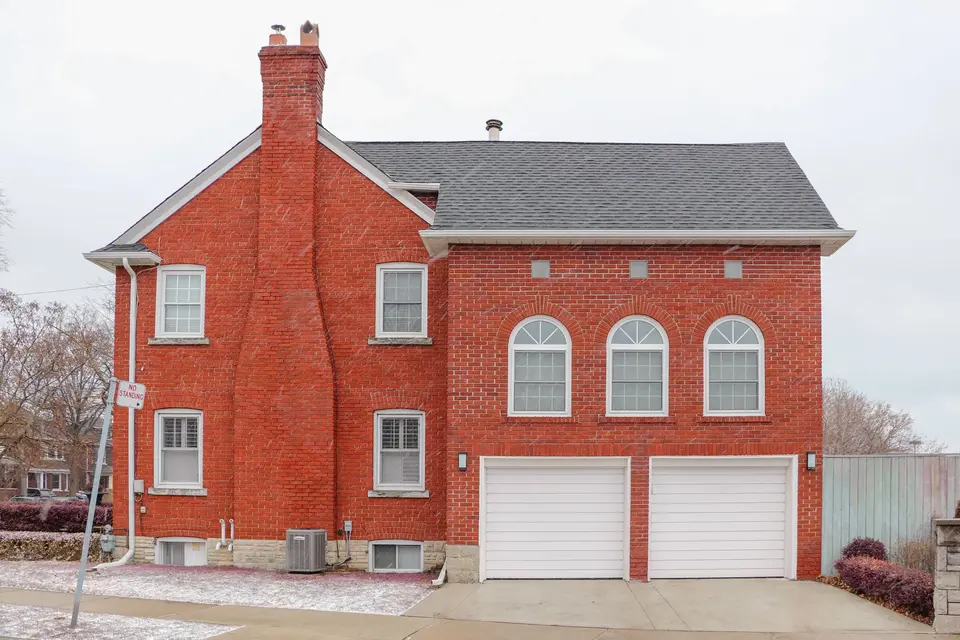
Older St. Catharines neighbourhoods, central Welland, Niagara Falls near Victoria and Lundy's Lane, and Port Colborne all have big older houses that were split into two units decades ago, plus newer homes with a basement apartment added. Ontario now allows up to three residential units on most serviced urban residential lots as of right (the main home plus two additional units, which can include a garden suite or coach house), subject to each municipality's zoning details and the Building and Fire Codes. Check the current by-law and confirm with the municipality before you count on a specific layout.
For a buyer, a legal second unit does two things: it brings in rent that some lenders let you use to qualify, and it often makes the house easier to resell. For an owner, it is a way to add value and income without moving.
- Min. down, owner-occupied 1–2 units
- 5% / 10% tiers
- Min. down, owner-occupied 3–4 units
- 10%
- Suite refinance (insured)
- Up to 90% LTV
- Suite refinance value cap
- $2M
What lenders check on a duplex or suite
Legal or "legal non-conforming"?
Underwriters and appraisers want to know whether the second unit is legal: permitted by zoning, built or inspected under a building permit, with fire separation, egress and separate smoke and CO alarms as required. Some older duplexes predate current rules and are "legal non-conforming". An unpermitted basement apartment is the common problem: many lenders will value it as a finished basement and ignore the rent. Ask the seller for permits and check with the municipality's building department.
Owner-occupied or fully rented?
If you live in one unit, the property can be insured with less than 20% down under current insurer rules: the standard minimums for one or two units, and 10% for three or four units. If neither unit is yours, it is a rental and most lenders want 20% down.
Market rent
Lenders use the lower of actual rent under a lease and market rent from the appraiser. A suite rented to a family member at half price may only count at half price.
Separate meters and entrances
Not always required, but separate entrances, utilities and laundry help an appraiser treat the property as two units rather than a house with a basement bedroom.
Buying a duplex to live in
Worked example: owner-occupied duplex in St. Catharines, $720,000
A repeat buyer purchases a legal up-down duplex for $720,000, lives upstairs and rents the lower unit at $1,800 a month. Minimum down payment: 5% of $500,000 ($25,000) plus 10% of $220,000 ($22,000) = $47,000, or 6.53%.
| Item | Amount |
|---|---|
| Base loan ($720,000 − $47,000), LTV 93.5% | $673,000 |
| Default insurance premium (4.00%), added to loan | $26,920 |
| 8% Ontario PST on premium, paid in cash at closing | $2,153.60 |
| Total mortgage | $699,920 |
| Monthly payment at 4.29% | $3,793 |
| Qualifying payment at 6.29% | $4,599 |
| Property tax ($720,000 × approx. 1.26% ÷ 12) | $756 |
With heat at $125, GDS costs at the qualifying rate are $5,480 a month. Without the suite, the buyer needs about $168,600 of gross income to stay at 39% GDS. If the lender adds 50% of the $1,800 rent ($900) to income, the buyer's own income requirement drops to about $157,800, roughly $10,800 less. Lenders that use a higher share of rent, or an offset method, can lower it further.
Cash to close beyond the $47,000 down payment includes the $2,153.60 PST, Ontario land transfer tax of $10,875 (no municipal LTT in Niagara) and about $1,850 in legal costs.
Adding a suite to the home you own: the 90% refinance
Normally a refinance stops at 80% of today's value. Since January 15, 2025, an insured refinance to add a secondary suite can go up to 90% of the as-improved value, for properties worth up to $2 million, up to four units, with amortization up to 30 years. Lenders typically release the construction money in draws or hold it back until the suite is finished and inspected. Not every lender offers it, and the insurer's premium applies.
Worked example: basement suite in Welland
An owner has a home worth $560,000 today with a $430,000 mortgage and wants to build a legal basement suite costing $120,000. The appraiser estimates the finished value at $660,000.
| Item | Conventional (80% of today) | Suite refinance (90% as-improved) |
|---|---|---|
| Value used | $560,000 | $660,000 |
| Maximum loan | $448,000 | $594,000 |
| Room above existing $430,000 | $18,000 | $164,000 |
| Covers the $120,000 suite? | No | Yes |
Borrowing $550,000 ($430,000 + $120,000) is 83.3% of the as-improved value. At the 2.80% premium shown in the insurer purchase table for that LTV band, the premium is $15,400 and the 8% PST is $1,232 in cash. The total loan of $565,400 at 4.29% over 30 years costs about $2,782 a month. Confirm the insurer's current premium for this program before relying on it.
Which lender tier fits
| Situation | Usual fit |
|---|---|
| Legal 2-unit, owner-occupied, less than 20% down | A-lender, insured |
| Legal 3–4 units, owner-occupied | A-lender, insured with 10%+ down, or conventional |
| Fully rented duplex or triplex | A-lender rental program with 20%+ down; credit union if ratios are tight |
| Unpermitted suite to be legalized | Purchase plus improvements, or private short term then refinance |
| BRRRR: buy, renovate, rent, refinance | Private or B-lender to buy and renovate; A-lender or credit union refinance at up to 80% of the new value |
| Five units or more | Commercial lending; see multi-family mortgages |
BRRRR (buy, renovate, rent, refinance, repeat) works only if the refinance appraisal comes in where you planned. Model it with the cash-flow calculator before you buy, and see purchase plus improvements for a cheaper route on smaller renovations.
Steps to finance a duplex or suite
- Confirm the unit is legal or can be. Zoning, permits and the three-units-per-lot rules in your municipality; confirm with the building department.
- Collect leases and rents. Current leases, rent history and a sense of market rent for the unit.
- Get pre-approved with the rent included. We compare add-back and offset treatment across lenders. Start at pre-approval.
- For a new suite, line up permit, quote and lender together. The lender needs the contractor's quote and permit to approve draws.
- Close or start construction. Draws are released as work is inspected; the last draw follows completion.
Frequently asked questions
Can I buy a duplex with 5% down in Niagara?
If you live in one of the units and the property is under $1.5 million, the standard minimum down payment applies to a two-unit home: 5% of the first $500,000 and 10% of the rest. On a $720,000 duplex that is $47,000. Three- and four-unit owner-occupied homes generally need at least 10% down.
Does basement apartment rent help me qualify?
Yes, if the unit is legal and the lender accepts the rent. Many lenders add 50% of the rent to your income, and some use more or an offset method. In our St. Catharines example, adding 50% of $1,800 rent cut the required income by about $10,800 a year.
What is the 90% secondary suite refinance?
Since January 15, 2025, an insured refinance to add a secondary suite can go up to 90% of the as-improved value, for homes worth up to $2 million with up to four units and up to a 30-year amortization. Funds are usually released in draws or held back until the suite is finished. Not every lender offers it.
Will a lender count rent from an unpermitted suite?
Often not. Many lenders value an unpermitted apartment as finished basement space and ignore the rent, and some will not lend if the use breaks the by-law. Legalizing the unit, sometimes with a purchase-plus-improvements mortgage, usually makes the file stronger.
Can I add a garden suite in St. Catharines or Welland?
Ontario allows up to three units on most serviced urban residential lots, which can include a detached garden suite, subject to local zoning, servicing, setbacks and the Building Code. Check the current by-law and confirm with the municipality before designing or financing one.
Pre-approval & rate review
Get your Niagara mortgage numbers checked
Tell us where you are buying or what you owe. We reply by email, usually within one business day, with options from across the lender tiers.
- A licensed advisor reviews your numbers against A-lenders, Ontario credit unions and alternative lenders.
- Rate holds of up to 120 days on purchases and renewals (lender-dependent).
- On prime files the lender pays the brokerage, so there is no fee to you; any fee on alternative or private files is disclosed in writing first.
- Nothing goes to a lender or credit bureau until you say so.
Prefer email? Write to hello@mortgageniagara.com.